
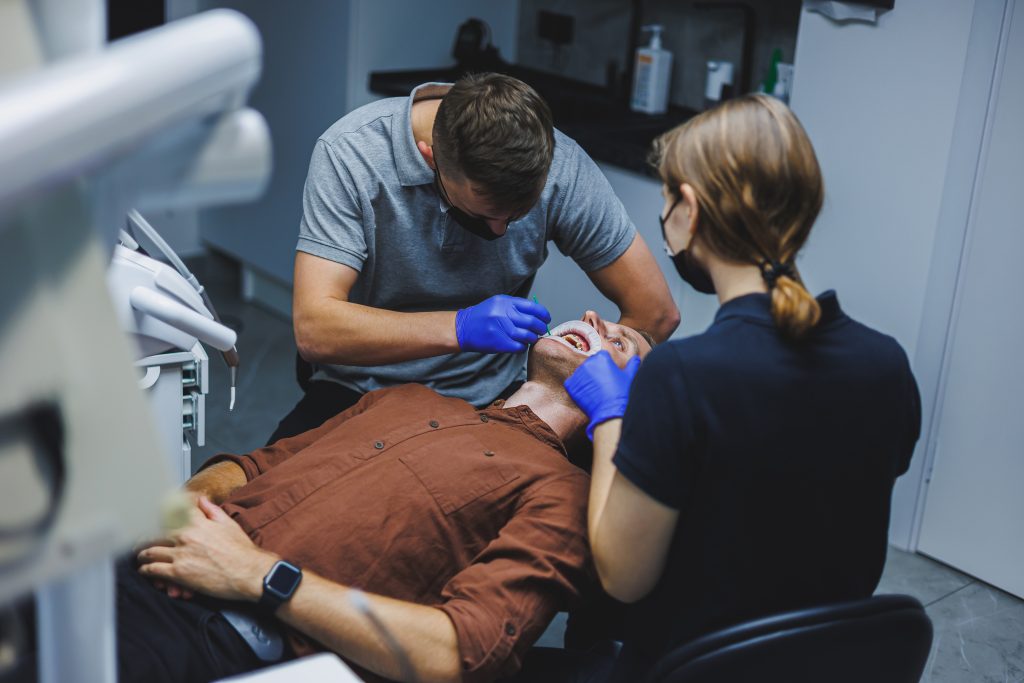
The UK’s dental system is fracturing in plain sight. As NHS waiting lists stretch and contract reforms loom, a quiet migration is underway, and it’s starting with a search bar.
In January 2026, the Chancellor ordered the Competition and Markets Authority to investigate private dentistry.
The stated concern: hidden costs, lack of transparency, and overtreatment. The unstated reality: millions of patients have already made their choice. They’re paying out of pocket because waiting months for NHS care that may never arrive is no longer acceptable.
This isn’t a story about wealthy patients seeking whiter teeth. It’s about ordinary people, priced out of inaction, turning to Google before their GP.
The Numbers Behind the Shift
Search data tells a story that waiting room anecdotes cannot.
In 2024, the term “private dental treatment price list” was searched for more than 10,500 times in a single month in the UK. By January 2026, that figure had halved—not because interest waned, but because patients had moved on.
They’d done their research. Now they were searching for something more specific: a dentist nearby, a hygienist who could see them this week, a clinic that would answer the phone.
The shift from generic to local, from research to action, reflects a patient population that has already made its decision. The question is no longer “should I go private?” — it’s “where?”
The NHS Exodus
The backdrop to this migration is well documented but bears repeating.
In December 2025, the government announced the most significant reforms to the NHS dental contract in years. From April 2026, new pathways for urgent and complex care will take effect, alongside requirements that practices provide emergency appointments. The stated aim is to ensure that NHS dentistry delivers value for money and prioritises those in greatest need.
The British Dental Association’s response was blunt. Chair Eddie Crouch described the system as “not fit for purpose” — a phrase that has echoed through the profession for two decades.
Health officials in Lincolnshire admitted publicly what many had long suspected: dentists are leaving the NHS because the economics no longer work.
For patients, the implications are immediate. NHS 111 dental enquiries rose 20% year-on-year in late 2025. In some regions, Healthwatch volunteers made up to 15 calls without finding available urgent care. The safety net, it turns out, has holes.
The Hygienist Surge
Perhaps no trend better illustrates the fracture than the explosion in searches for private dental hygienists.
In February 2024, fewer than 60 people per month searched for “private dental hygienist” in the UK. By late 2025, that figure had surged past 600 — a 486% increase that shows no sign of slowing.
The reasons are readily apparent. Hygienist appointments are often the first casualty of NHS capacity constraints. Routine cleanings are deprioritised. Prevention gives way to triage. Patients who want their teeth cleaned, not because something is wrong, but because they want to keep them that way, are discovering that the NHS has no time for them.
Private hygienists, by contrast, are increasingly visible online, bookable directly, and priced at accessible rates. For many, a £60 cleaning every six months is easier to justify than a year-long wait for an NHS appointment that may never come.
For private dental practices, this represents both opportunity and responsibility. Hygienist services are a gateway not only to revenue but also to long-term patient relationships built on prevention rather than crisis.
The Local Imperative
The most striking trend in the data is the rise of local intent.
Searches for “private dental care near me” have grown 35% since 2024. The number of “Private dental clinic near me” searches has nearly tripled. Patients are no longer browsing— they are ready to book.
This has profound implications for dental SEO. Generic content about “private dentistry in the UK” may generate impressions, but it won’t generate appointments. What converts is specificity: clear pricing, genuine reviews, visible availability, and a Google Business Profile that answers questions before they’re asked.
Clinics that treat their digital presence as an afterthought will lose to those that treat it as the front door. Because for a growing number of patients, it is.
The Turkey Question
No discussion of private dental pricing is complete without addressing the elephant in the waiting room: dental tourism.
Between 150,000 and 200,000 UK patients travel to Turkey annually for dental work. The appeal is obvious: costs are 50–70% lower than UK equivalents, all-inclusive packages are available, and a holiday is included. The risks are less discussed until they materialise.
UK dentists report a steady stream of patients returning from abroad with complications, including aggressive tooth reduction, infections, nerve damage, and restorations that don’t fit UK standards. The NHS, stretched as it is, generally won’t repair failed cosmetic work. Patients are left paying twice—once abroad and once at home to rectify what went wrong.
For private practices, this creates a delicate opportunity. The message isn’t “don’t go to Turkey” patients will make their own decisions. The message is “we’re here when you need us” — and increasingly, they do.
The CMA Investigation: What It Means
The Chancellor’s call for a Competition and Markets Authority investigation into private dentistry has drawn sharp criticism from the profession.
The BDA called it “utterly perverse” — arguing that private dentists are simply covering their costs, some of which are a direct result of government policy. The British Association of Private Dentistry noted that private practice didn’t cause the access crisis, inflationary pressure, or workforce shortages. The root cause, they argue, is decades of political neglect.
Whether the investigation leads to regulatory action remains to be seen. What’s certain is that transparency will become non-negotiable. Practices that already publish clear pricing, explain what’s included, and avoid surprises will be better positioned than those that don’t.
For healthcare marketing, the message is clear: trust is built before the first appointment. Patients are researching, comparing, and judging—often based on what they find online before they pick up the phone. Clinics investing in targeted PPC are capturing that trust at the exact moment patients search.
What 2026 Holds
The trends are unlikely to reverse.
NHS contract reforms may improve urgent access, but they won’t rebuild a workforce that has spent years leaving for private practice or retirement. The surge in hygienist appointments will continue as prevention-conscious patients seek care that the NHS can’t provide. Local search will dominate as patients move from research to action.
For private dental practices, the question isn’t whether demand exists. It’s whether they’re visible where that demand begins online, specific, and ready to convert.
The price of a smile in 2026 isn’t just what’s on the invoice. It’s the cost of being found, trusted, and chosen. In a market shaped by search, that price is paid in clarity, presence, and the willingness to meet patients where they are: one query at a time.
